CFR-25JB-52-1M2 Adjustable Inductors highlighting the core functional technology articles and application development cases of Adjustable Inductors that are effective.

author Time 2025-05-08 11:26:06 11

CFR-25JB-52-1M2 Adjustable Inductors: Core Functional Technology and Application Development

Overview of Adjustable Inductors Adjustable inductors are essential components in electronic circuits, allowing for the modification of inductance values to optimize performance. The CFR-25JB-52-1M2 model exemplifies the capabilities of adjustable inductors, showcasing their versatility across various applications.

Core Functional Technology
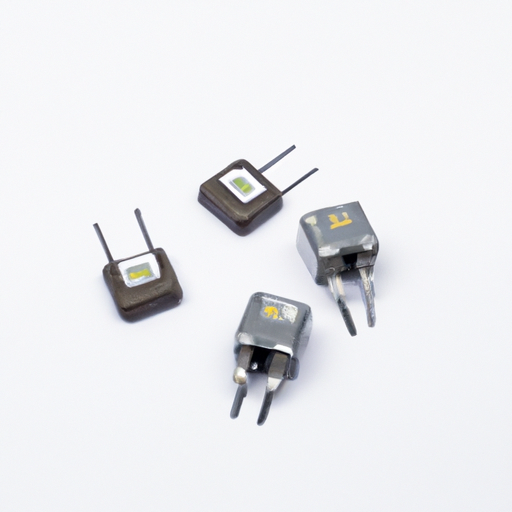
CFR-25JB-52-1M2 Adjustable Inductors highlighting the core functional technology articles and application development cases of Adjustable Inductors that are effective.

1. Variable Inductance: The CFR-25JB-52-1M2 incorporates a mechanism for adjusting inductance values, typically through a movable core or variable winding configuration. This feature enables precise tuning to meet specific circuit requirements, enhancing overall performance.

2. High Precision: Designed for high precision, the CFR-25JB-52-1M2 ensures minimal deviation in inductance adjustments. This precision is critical in applications where exact inductance values are necessary for optimal circuit functionality.

3. Robust Construction: The inductor is built to endure various environmental conditions, making it suitable for both commercial and industrial applications. Its robust design contributes to longevity and reliability, ensuring consistent performance over time.

4. Wide Frequency Range: The CFR-25JB-52-1M2 operates effectively across a broad frequency spectrum, making it a versatile component in RF (radio frequency) and audio applications. This capability allows for its use in diverse electronic systems.

5. Low Loss Characteristics: Designed to minimize energy loss, the CFR-25JB-52-1M2 is essential for maintaining efficiency in electronic circuits. Low loss characteristics contribute to improved overall circuit performance and energy conservation.

Application Development Cases

1. RF Tuning Circuits: In RF applications, adjustable inductors are crucial for tuning circuits to specific frequencies. The CFR-25JB-52-1M2 can be integrated into RF amplifiers and oscillators, enabling engineers to fine-tune inductance for optimal signal clarity and strength.

2. Audio Equipment: In audio applications, adjustable inductors are utilized in equalizers and filters. The ability to adjust inductance allows for shaping the audio response, facilitating customized sound profiles in high-fidelity audio systems.

3. Power Supply Regulation: Adjustable inductors play a vital role in power supply circuits for voltage and current regulation. The CFR-25JB-52-1M2 can be incorporated into buck or boost converters, where precise inductance adjustments are necessary for stable output.

4. Inductive Load Applications: In applications involving inductive loads, such as motors and transformers, adjustable inductors help manage load characteristics. This is particularly beneficial in variable speed drives, where inductance needs to be adjusted based on operational conditions.

5. Educational and Research Applications: Adjustable inductors are frequently used in educational settings for experiments and demonstrations related to electromagnetic theory and circuit design. The CFR-25JB-52-1M2 serves as a practical tool for students and researchers to explore inductance and its effects on circuit behavior.

Conclusion The CFR-25JB-52-1M2 adjustable inductor is a critical component in modern electronic design, offering flexibility, precision, and reliability across various applications. Its ability to adapt inductance values makes it invaluable in RF tuning, audio processing, power regulation, and educational contexts. As technology continues to advance, the role of adjustable inductors will remain significant in developing innovative electronic solutions, driving progress in multiple fields.

Article
Lastest
application development in Proximity/Occupancy Sensors Finished Units for CFR-50JB-52-16K: key technologies and success stories
Application Development in Proximity/Occupancy Sensors for CFR-50JB-52-16K: Key Technologies and Success StoriesDeveloping applications for proximity and occupancy sensors, particularly in finished units like CFR-50JB-52-16K, involves leveraging various key technologies and methodologies. Here’s an overview of the key technologies involved and some success stories that illustrate their application. Key Technologies1. Sensor Technology2. Wireless Communication3. Data Processing and Analytics4. Machine Learning and AI5. Integration with IoT Platforms6. User Interfaces1. Smart Buildings2. Retail Environments3. Smart Homes4. Healthcare Facilities5. Public Spaces Success Stories ConclusionThe development of applications for proximity and occupancy sensors in finished units like CFR-50JB-52-16K is driven by advancements in sensor technology, data analytics, and IoT integration. Success stories across various sectors demonstrate the potential for these technologies to enhance efficiency, reduce costs, and improve user experiences. As the technology continues to evolve, further innovations and applications are likely to emerge, making environments smarter and more responsive to user needs. The ongoing integration of machine learning and AI will further enhance the capabilities of these systems, paving the way for more intelligent and adaptive solutions in the future.
CFR-50JB-52-16R Photoelectric, Industrial highlighting the core functional technology articles and application development cases of Photoelectric, Industrial that are effective.
Overview of CFR-50JB-52-16R Photoelectric SensorThe CFR-50JB-52-16R is a specific model of photoelectric sensor designed for industrial applications, showcasing advanced features that enhance its functionality in automation and control systems. This sensor operates on the principles of non-contact detection, making it an essential component in various industrial processes. Core Functional Technologies1. Detection Principles2. Output Types3. Environmental Resistance4. Adjustable Sensitivity5. Communication Protocols1. Automated Packaging Lines2. Material Handling3. Quality Control4. Safety Applications5. Sorting Systems6. Automated Door Systems Application Development Cases ConclusionThe CFR-50JB-52-16R photoelectric sensor exemplifies the critical role of photoelectric technology in modern industrial automation. By leveraging various detection principles, output types, and robust environmental resistance, this sensor enhances operational efficiency, safety, and quality control across diverse applications. As industries increasingly adopt automation and smart technologies, the demand for effective photoelectric sensors like the CFR-50JB-52-16R will continue to grow, driving further innovation and application development in this vital field.
application development in Specialized Sensors for CFR-25JB-52-160R: key technologies and success stories
Application Development in Specialized Sensors for CFR-25JB-52-160R: Key Technologies and Success StoriesDeveloping applications for specialized sensors such as the CFR-25JB-52-160R involves leveraging cutting-edge technologies and methodologies tailored to meet specific industry needs. These sensors find applications across various sectors, including aerospace, automotive, and industrial automation. Below, we explore key technologies and notable success stories that highlight the impact of these specialized sensors. Key Technologies1. Microelectromechanical Systems (MEMS):2. Wireless Sensor Networks (WSN):3. Internet of Things (IoT):4. Data Analytics and Machine Learning:5. Embedded Systems:6. Signal Processing:7. Calibration and Testing Technologies:1. Aerospace Monitoring:2. Automotive Applications:3. Industrial Automation:4. Smart Agriculture:5. Environmental Monitoring: Success Stories ConclusionThe development of applications for specialized sensors like the CFR-25JB-52-160R harnesses a variety of advanced technologies, including MEMS, IoT, and machine learning. The success stories across diverse industries illustrate the transformative impact of these sensors on safety, efficiency, and performance. As technology continues to advance, the potential applications for specialized sensors will expand, driving innovation and enhancing outcomes across numerous fields. The ongoing evolution of sensor technology promises to unlock new possibilities, further integrating these devices into the fabric of modern industry and daily life.
CFR-25JB-52-160K Sensor, Capacitive Touch highlighting the core functional technology articles and application development cases of Sensor, Capacitive Touch that are effective.
Core Functional Technology Articles1. Principles of Capacitive Touch Sensing2. Types of Capacitive Touch Sensors3. Touch Sensor Design Considerations4. Signal Processing Techniques5. Integration with Microcontrollers1. Consumer Electronics2. Home Automation3. Automotive Applications4. Industrial Control Panels5. Healthcare Devices Application Development Cases ConclusionCapacitive touch sensors, exemplified by the CFR-25JB-52-160K, are integral components across diverse industries, enhancing user interfaces and enabling innovative applications. By understanding the underlying technology and examining successful application cases, developers can effectively leverage capacitive touch technology to create intuitive and responsive products. This knowledge not only aids in the design and implementation of touch interfaces but also fosters innovation in user experience across various sectors.
86-0755-82705566