What are the Product Characteristics of Capacitor Wiring Diagrams?
I. Introduction
A. Definition of Capacitor Wiring Diagrams
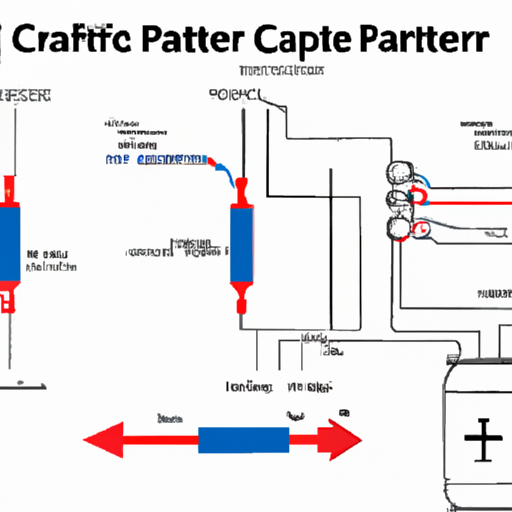
Capacitor wiring diagrams are visual representations that illustrate how capacitors are connected within an electrical circuit. These diagrams serve as essential tools for engineers, technicians, and hobbyists, providing a clear understanding of the circuit's layout and functionality. They depict the arrangement of capacitors, their connections to other components, and the overall flow of electrical current.
B. Importance of Understanding Capacitor Wiring Diagrams
Understanding capacitor wiring diagrams is crucial for anyone involved in electrical engineering or electronics. These diagrams not only help in the design and troubleshooting of circuits but also ensure that components are connected correctly to avoid malfunctions or damage. A well-constructed wiring diagram can save time and resources, making it an invaluable asset in both educational and professional settings.
C. Overview of the Article
This article will explore the product characteristics of capacitor wiring diagrams, including their clarity, accuracy, completeness, standardization, and scalability. We will also discuss the basics of capacitors, the purpose of wiring diagrams, common elements found in these diagrams, practical applications, and best practices for creating and interpreting them.
II. Basics of Capacitors
A. Definition and Function of Capacitors
Capacitors are passive electronic components that store and release electrical energy in a circuit. They consist of two conductive plates separated by an insulating material known as a dielectric. When voltage is applied, an electric field forms between the plates, allowing the capacitor to store energy. Capacitors play a vital role in various applications, including filtering, timing, and energy storage.
B. Types of Capacitors
1. **Electrolytic Capacitors**: These capacitors are polarized and typically used for high-capacity applications. They are commonly found in power supply circuits.
2. **Ceramic Capacitors**: Known for their stability and reliability, ceramic capacitors are often used in high-frequency applications and are non-polarized.
3. **Film Capacitors**: These capacitors use a thin plastic film as the dielectric and are known for their low loss and high stability, making them suitable for audio and RF applications.
4. **Tantalum Capacitors**: Tantalum capacitors are also polarized and are known for their small size and high capacitance values, often used in compact electronic devices.
C. Applications of Capacitors in Circuits
Capacitors are used in a wide range of applications, including power supply filtering, signal coupling and decoupling, timing circuits, and energy storage in renewable energy systems. Their ability to store and release energy makes them essential in both analog and digital circuits.
III. Understanding Wiring Diagrams
A. Definition of Wiring Diagrams
Wiring diagrams are graphical representations that show the connections and layout of electrical components in a circuit. They provide a visual guide for assembling, troubleshooting, and maintaining electrical systems.
B. Purpose of Wiring Diagrams in Electrical Engineering
The primary purpose of wiring diagrams is to convey information about the electrical connections and relationships between components. They help engineers and technicians understand how a circuit operates, identify potential issues, and ensure that components are connected correctly.
C. Components of a Wiring Diagram
1. **Symbols and Notations**: Wiring diagrams use standardized symbols to represent different electrical components, such as resistors, capacitors, and switches.
2. **Lines and Connections**: Lines in a wiring diagram indicate electrical connections between components. Solid lines typically represent conductive paths, while dashed lines may indicate non-conductive connections.
3. **Labels and Annotations**: Diagrams often include labels and annotations to provide additional information about component values, specifications, and connection points.
IV. Product Characteristics of Capacitor Wiring Diagrams
A. Clarity and Readability
1. **Importance of Clear Symbols**: Clear and recognizable symbols are essential for effective communication in wiring diagrams. Using standardized symbols helps ensure that anyone reading the diagram can easily understand the components and their functions.
2. **Use of Color Coding**: Color coding can enhance the readability of wiring diagrams by differentiating between various types of connections and components. For example, using different colors for positive and negative connections can help prevent errors during assembly.
B. Accuracy and Precision
1. **Importance of Correct Connections**: Accurate wiring diagrams are critical for ensuring that components are connected correctly. Incorrect connections can lead to circuit malfunctions, damage to components, or even safety hazards.
2. **Avoiding Common Errors**: A well-designed wiring diagram minimizes the risk of common errors, such as mislabeling components or omitting connections. This accuracy is vital for both novice and experienced engineers.
C. Completeness
1. **Inclusion of All Necessary Components**: A complete wiring diagram includes all components necessary for the circuit to function as intended. This includes capacitors, resistors, inductors, and any other relevant components.
2. **Detailed Annotations**: Detailed annotations provide additional context and information about the components and their functions, helping users understand the circuit's operation.
D. Standardization
1. **Adherence to Industry Standards**: Standardized wiring diagrams follow established conventions and guidelines, making them easier to read and understand across different industries and applications.
2. **Benefits of Standardized Diagrams**: Standardization promotes consistency and reduces confusion, allowing engineers and technicians to work more efficiently and effectively.
E. Scalability
1. **Adaptability to Different Circuit Sizes**: Wiring diagrams should be scalable, allowing them to be adapted for circuits of varying sizes and complexities. This flexibility is essential for both small projects and large industrial systems.
2. **Modular Design Considerations**: Modular designs enable the easy addition or removal of components, making it simpler to modify circuits as needed.
V. Common Elements in Capacitor Wiring Diagrams
A. Capacitor Symbols
Capacitor symbols are standardized representations used in wiring diagrams to indicate the presence of capacitors. These symbols vary depending on the type of capacitor, such as polarized or non-polarized.
B. Connection Types
1. **Series vs. Parallel Connections**: Wiring diagrams must clearly indicate whether capacitors are connected in series or parallel, as this affects the overall capacitance and behavior of the circuit.
2. **Grounding and Reference Points**: Grounding symbols and reference points are essential for establishing a common return path for electrical current, ensuring the circuit operates safely and effectively.
C. Additional Components
1. **Resistors**: Resistors are often included in capacitor wiring diagrams to illustrate their role in controlling current flow and voltage levels.
2. **Inductors**: Inductors may also be represented in wiring diagrams, particularly in circuits where capacitors and inductors work together, such as in filters and oscillators.
3. **Switches**: Switches are crucial for controlling the flow of electricity in a circuit, and their representation in wiring diagrams helps clarify how the circuit can be activated or deactivated.
VI. Practical Applications of Capacitor Wiring Diagrams
A. In Consumer Electronics
Capacitor wiring diagrams are widely used in consumer electronics, such as smartphones, televisions, and audio equipment. They help engineers design circuits that optimize performance and reliability.
B. In Industrial Applications
In industrial settings, capacitor wiring diagrams are essential for designing and maintaining complex machinery and control systems. They ensure that components are connected correctly for safe and efficient operation.
C. In Renewable Energy Systems
Capacitors play a vital role in renewable energy systems, such as solar inverters and wind turbines. Wiring diagrams help engineers design circuits that maximize energy efficiency and reliability.
D. In Automotive Engineering
In automotive engineering, capacitor wiring diagrams are used to design and troubleshoot electrical systems in vehicles, including power distribution, lighting, and infotainment systems.
VII. Best Practices for Creating and Reading Capacitor Wiring Diagrams
A. Tips for Designing Effective Diagrams
1. Use standardized symbols and notations to enhance clarity.
2. Incorporate color coding to differentiate between connections and components.
3. Ensure all components are labeled and annotated for easy reference.
B. Techniques for Reading and Interpreting Diagrams
1. Familiarize yourself with common symbols and notations.
2. Follow the flow of the diagram to understand how components are connected.
3. Pay attention to annotations for additional context and information.
C. Tools and Software for Diagram Creation
Various software tools are available for creating wiring diagrams, including AutoCAD, Microsoft Visio, and specialized circuit design software. These tools can streamline the design process and ensure accuracy.
VIII. Conclusion
A. Recap of Key Points
In summary, capacitor wiring diagrams are essential tools for understanding and designing electrical circuits. Their product characteristics, including clarity, accuracy, completeness, standardization, and scalability, play a crucial role in ensuring effective communication and functionality.
B. The Importance of Mastering Capacitor Wiring Diagrams
Mastering capacitor wiring diagrams is vital for anyone involved in electrical engineering or electronics. A solid understanding of these diagrams can lead to improved circuit design, troubleshooting, and overall efficiency.
C. Encouragement for Further Learning and Exploration
As technology continues to evolve, the importance of understanding capacitor wiring diagrams will only grow. We encourage readers to explore further resources, engage in hands-on projects, and continue learning about this essential aspect of electrical engineering.
IX. References
A. Suggested Reading Materials
1. "The Art of Electronics" by Paul Horowitz and Winfield Hill
2. "Electrical Engineering 101" by Darren Ashby
B. Online Resources and Tools
1. Electronics tutorials and forums
2. Circuit simulation software
C. Industry Standards and Guidelines
1. National Electrical Code (NEC)
2. International Electrotechnical Commission (IEC) standards
By understanding the product characteristics of capacitor wiring diagrams, you can enhance your skills in electrical engineering and electronics, paving the way for successful projects and innovations.


